Home Renovation Loans in Saskatchewan
Financing to renovate a kitchen, bathroom, or basement, or to make energy-efficiency upgrades.

Step 1 of 3
Your renovation
Sphera Credit collects the information you enter here to respond to your request. Each step is saved as you complete it. See the Privacy Policy.
Sphera Credit is a technology and marketing platform and is not involved in any lending or brokering activity of any kind. Lenders set their own rates, terms and decisions.
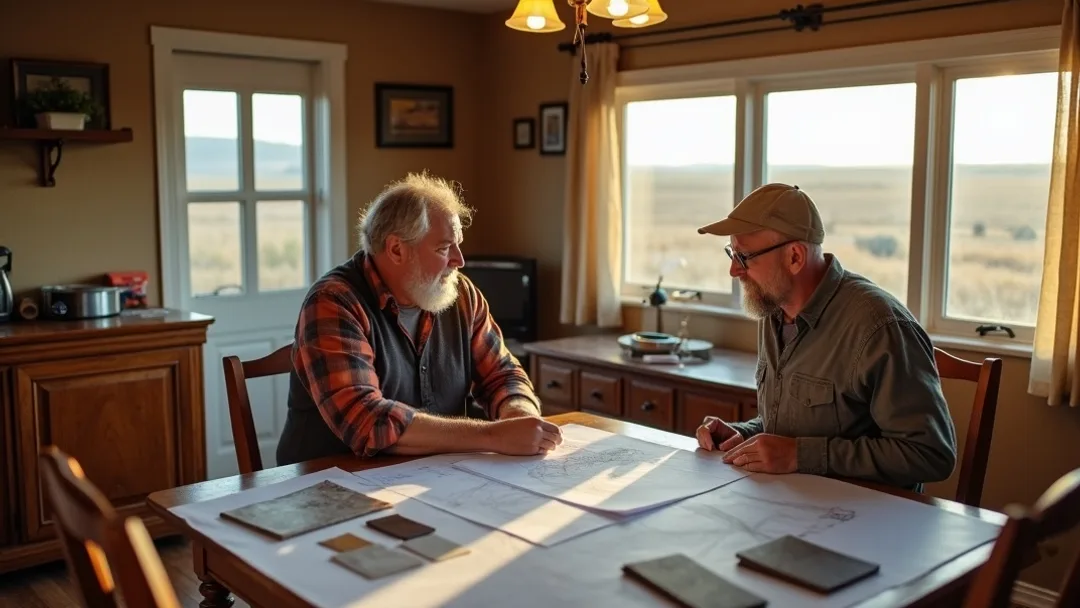
A home renovation loan is a financing product that lets Saskatchewan homeowners borrow money specifically to improve, repair, or upgrade their property. Rather than refinancing your entire mortgage, a renovation loan provides a dedicated sum for your project, whether that is weatherizing a 1960s bungalow in Saskatoon, finishing a basement in Regina, or upgrading the heating system on a rural property near Prince Albert.
Saskatchewan homeowners face a distinct tax environment when renovating. The province charges a 6% Provincial Sales Tax (PST) on most building materials and contractor labour, plus the 5% federal GST, bringing the combined rate to 11%. That is lower than Ontario's 13% HST or Quebec's 14.975% combined rate, but higher than Alberta's 5% GST-only environment. Understanding how PST applies to your renovation budget is critical for accurate cost planning.
Saskatchewan does not charge a land transfer tax on residential purchases. This means the financial gap between renovating your current home and buying a different property is narrower than in provinces like Ontario or British Columbia, where land transfer taxes add thousands to a purchase. That said, real estate commissions, moving costs, and the emotional cost of uprooting a family still favour renovating when the scope is manageable.
The provincial housing stock tells a clear story about renovation demand. Saskatchewan experienced significant residential construction waves in the 1950s through 1970s, driven by agricultural prosperity and potash mining growth. According to Statistics Canada census data, a large share of homes in Saskatoon, Regina, Moose Jaw, and smaller communities are 50 to 70 years old. These homes commonly need electrical upgrades, insulation improvements, foundation repairs, and plumbing replacements that renovation loans are designed to finance.
The Financial and Consumer Affairs Authority of Saskatchewan (FCAA) regulates lending in the province, including licensing of loan brokers and lending corporations. Under The Consumer Protection and Business Practices Act, Saskatchewan borrowers have the right to clear disclosure of all loan terms, and lenders must be licensed with the FCAA to operate in the province.
Sphera Credit is a technology and marketing platform and is not involved in any lending or brokering activity of any kind. We do not assess creditworthiness, originate loans, or take part in any lender's decision.
Share what you need through a short, no-obligation form. We do not pull your credit, we do not make a lending decision, and we do not decide whether you qualify.
When a lender that advertises through our network offers this type of financing in your province, we put you in contact with that lender. Which lender depends only on your province and the type of financing you asked about.
- Weatherization and insulation upgrades to combat Saskatchewan's extreme winters (-40°C with wind chill), including spray foam insulation, triple-pane windows, and improved vapour barriers on older homes
- Kitchen renovations ($15,000 to $65,000 in Saskatoon and Regina), including cabinet replacement, countertop upgrades, appliance installation, and full gut-and-rebuild projects
- Basement developments and finishing, particularly popular in Regina and Saskatoon where below-grade space offers affordable square footage gains without building an addition
- Heating system replacements, converting older natural gas furnaces to high-efficiency models or heat pumps, which may qualify for SaskEnergy equipment replacement rebates
- Roofing replacement and exterior repairs critical for homes exposed to prairie hailstorms, heavy snow loads, and freeze-thaw cycling that degrades shingles and siding faster than in milder climates
- Foundation crack repair and waterproofing on older homes built during the 1950s-1970s construction boom, where shifting clay soils and decades of frost heave have caused structural movement
- Whole-home renovations ($60,000 to $200,000+) on older Saskatoon and Regina bungalows, covering electrical panel upgrades, plumbing replacement, HVAC modernization, and cosmetic finishes in a single project
- Saskatchewan resident with valid Saskatchewan photo ID (driver's licence or Saskatchewan Identification Card)
- Age 19 or older (Saskatchewan's age of majority)
- Homeowner with equity in a residential property located in Saskatchewan
- Verifiable income sufficient to cover the monthly loan payment alongside existing obligations, with a debt-to-income ratio below 44% preferred
- Credit score of 580 or above preferred, though some lenders accept lower scores when income and home equity are strong
- Active Canadian bank account with consistent deposit history
- No active bankruptcy or consumer proposal (a discharged bankruptcy is considered case by case)
Unsecured renovation loans in Saskatchewan typically range from $5,000 to $50,000, while secured loans backed by home equity can reach $150,000 or more. Repayment terms span 2 to 15 years depending on the loan type and amount. Interest rates for qualified borrowers generally fall between 6.99% and 19.99% APR for unsecured products, and 4.5% to 9.99% for secured home equity options. The federal Criminal Code cap on interest limits all non-payday loan rates to 35% APR as of January 2025.
Saskatchewan's renovation loan market includes Conexus Credit Union (Saskatchewan's largest credit union following its 2026 amalgamation with Cornerstone and Synergy), Affinity Credit Union (headquartered in Saskatoon with branches across the province), and national banks. Conexus offers personal loans at competitive member rates with flexible terms suited for renovations of any size. Affinity provides personal borrowing solutions and home equity products for larger renovation projects.
For energy-focused renovations, the City of Saskatoon's Home Energy Loan Program (HELP) offers loans between $1,000 and $60,000 at low interest rates, repaid through property taxes over 5, 10, or 20 years. HELP covers eligible retrofits including heat pumps, high-efficiency furnaces, insulation, and renewable energy installations. The Saskatchewan Home Renovation Tax Credit provides an additional benefit: a non-refundable 10.5% credit on eligible renovation expenses exceeding $1,000, up to $4,000 in expenses for a maximum annual tax savings of $420 (or up to $525 for seniors claiming $6,000 in expenses).
- The Saskatchewan Home Renovation Tax Credit returns up to $420 annually (up to $525 for seniors) on eligible renovation expenses, effectively reducing your project cost
- SaskPower and SaskEnergy rebate programs can be stacked with your renovation loan to offset energy efficiency upgrade costs, lowering your net borrowing amount
- No land transfer tax in Saskatchewan narrows the cost gap between renovating and buying, but avoiding real estate commissions and moving costs still favours renovation for most homeowners
- Saskatchewan credit unions like Conexus and Affinity offer competitive member rates and local service with branches across the province, often with more flexible qualification criteria than national banks
- On-time payments are reported to Equifax and TransUnion, building your credit profile while you improve your home
- Saskatchewan's 6% PST on building materials and contractor labour adds cost compared to Alberta's zero-PST environment, increasing total project expenses on larger renovations
- Renovation projects frequently exceed initial budgets, and the original loan amount may not cover cost overruns from supply chain delays or scope changes
- Secured renovation loans use your home as collateral, meaning you risk foreclosure if you default on payments
- Saskatchewan's economy is tied to agriculture, potash, and oil, which creates income volatility during commodity downturns that can make fixed monthly payments harder to maintain
- Extreme winter conditions limit the renovation season for exterior work to roughly May through October, which can compress timelines and increase contractor demand during peak months
| Feature | Unsecured Renovation Loan | HELOC | Conexus Credit Union | Saskatoon HELP |
|---|---|---|---|---|
| Typical APR | 6.99% - 19.99% | Prime + 0.5% to 2% | Competitive (member rates) | Low (municipal rate) |
| Maximum amount | $50,000 | Up to 65% of home value | Varies by equity | $60,000 |
| Collateral required | No | Yes (home equity) | Depends on product | No (property tax lien) |
| Repayment term | 2 - 7 years | Revolving | Flexible | 5, 10, or 20 years |
| Prepayment penalty | Varies by lender | Varies | None for most products | Varies |
| Eligible projects | Any renovation | Any renovation | Any renovation | Energy efficiency only |
- 1. Get at least three contractor quotes before applying for your loan. Saskatoon and Regina renovation costs typically range from $90 to $180 per square foot depending on the scope. Accurate estimates help you borrow the right amount without paying interest on funds you do not need.
- 2. Claim the Saskatchewan Home Renovation Tax Credit on your provincial income tax return. The 10.5% non-refundable credit on expenses above $1,000 (up to $4,000) returns up to $420, or up to $525 if you are a senior claiming up to $6,000. Eligible expenses include labour, materials, equipment rentals, and permits.
- 3. Check whether your renovation qualifies for SaskEnergy or SaskPower rebates before finalizing your budget. The Home Efficiency Retrofit Rebate covers windows, doors, insulation, and air sealing upgrades. The Residential Equipment Replacement Rebate covers high-efficiency furnaces and other qualifying equipment. These can offset a meaningful share of your energy upgrade costs.
- 4. Budget for Saskatchewan's 6% PST on building materials and contractor labour in addition to the 5% GST. On a $50,000 renovation, the combined 11% tax adds $5,500 to your project cost. Factor this into your loan amount from the start to avoid coming up short mid-project.
- 5. Schedule exterior work between May and October to avoid Saskatchewan's extreme winter conditions. Interior projects like basement finishing, kitchen renovations, and bathroom remodels can proceed year-round, making them good winter projects when contractor availability tends to be better and pricing may be more competitive.
- 6. If your renovation involves structural, electrical, plumbing, or gas work, verify permit requirements with your local municipality before work begins. Saskatchewan adopted the National Building Code of Canada 2020 as of January 1, 2024. Unpermitted work can create problems when you sell your home or file an insurance claim.
A renovation loan should improve your financial position by increasing your home's value, reducing energy costs, or preventing costly emergency repairs. Before borrowing, confirm that the renovation makes financial sense: a kitchen remodel in Saskatoon or Regina typically returns 75% to 80% of its cost at resale, while over-improving a modest bungalow beyond what the neighbourhood supports may not pay back.
If you work in agriculture, potash mining, oil extraction, or another commodity-dependent sector, budget conservatively and choose a repayment term that keeps monthly payments manageable even during price downturns. You can always prepay faster when times are good.
If your total debt (including the proposed renovation loan) would exceed 40% of your gross income, or if you are already struggling with existing payments, speak with a non-profit credit counsellor at Credit Counselling Society (1-888-527-8999) before taking on additional debt. The Credit Counselling Society offers free financial assessments and serves Saskatchewan residents. The FCAA also provides consumer resources and can verify that any lender or broker you are considering is properly licensed in the province.
Saskatchewan charges 6% PST on most building materials, fixtures, and contractor labour used in residential renovations, plus the 5% federal GST, for a combined tax rate of 11%. The Provincial Sales Tax Act requires contractors to collect PST on the full contract price including both materials and labour. On a $75,000 renovation, you would pay approximately $8,250 in combined taxes. This is lower than Ontario's 13% HST ($9,750) or Quebec's 14.975% combined rate ($11,231), but higher than Alberta's 5% GST-only ($3,750). Factor the full tax burden into your loan amount from the start so you do not run short mid-project.
The Saskatchewan Home Renovation Tax Credit is a non-refundable provincial income tax credit of 10.5% on eligible renovation expenses. Homeowners can claim expenses exceeding $1,000 up to a maximum of $4,000, resulting in annual tax savings of up to $420. Seniors (65 and older) can claim up to $6,000 for a maximum credit of $525. Eligible expenses include labour, professional services, building materials, fixtures, equipment rentals, and permits. The credit was re-introduced for the 2025 and subsequent taxation years. You claim the credit when filing your Saskatchewan income tax return.
SaskPower and SaskEnergy jointly offer the Home Efficiency Retrofit Rebate (HERR), which provides rebates from $20 to $1,800 for eligible building envelope improvements. Qualifying upgrades include high-performance windows, doors, insulation, and air sealing. A $200 rebate for pre and post-retrofit EnerGuide evaluations brings the total potential rebate to $2,000. Separately, SaskEnergy's Residential Equipment Replacement Rebate covers high-efficiency furnaces and other qualifying equipment. These rebates can be combined with your renovation loan to reduce your net project cost.
The City of Saskatoon's Home Energy Loan Program (HELP) provides loans between $1,000 and $60,000 at low interest rates for eligible energy retrofits, repaid through your property tax bill. Homeowners can choose repayment terms of 5, 10, or 20 years. Eligible projects include heat pumps, high-efficiency furnaces, insulation, low-flow fixtures, and renewable energy installations like solar panels. The loan stays with the property if you sell, not with the borrower. Note that HELP has experienced periods of full capacity where new applicants cannot be added, so check current availability before planning around this option.
The Financial and Consumer Affairs Authority of Saskatchewan (FCAA) regulates lenders, loan brokers, and credit unions operating in the province, ensuring they are licensed and comply with Saskatchewan law. Under The Consumer Protection and Business Practices Act, lenders must provide clear disclosure of all loan terms including interest rates, fees, and total cost of borrowing before you sign. The FCAA investigates complaints against licensed entities and can take enforcement action against unlicensed operators. Before signing any renovation loan, you can verify the lender's licence status by contacting the FCAA's Consumer Credit Division at 306-787-6700.
Saskatchewan winter temperatures regularly drop below -30°C with wind chills reaching -40°C or colder, placing enormous stress on older homes that lack modern insulation and air sealing. Many Saskatchewan homes built before 1980 have R-12 or lower attic insulation (current code requires R-50 or higher) and single-pane or early double-pane windows with significant air leakage. Inadequate weatherization leads to high heating bills, ice dam formation on roofs, frozen pipes, and premature wear on furnaces running at full capacity for months. Upgrading insulation, windows, and vapour barriers can reduce heating costs by 20% to 40% and extend the life of your HVAC system. These upgrades often qualify for SaskEnergy and SaskPower rebates, making them among the highest-return renovation investments for prairie homeowners.
Saskatchewan municipalities require building permits for any renovation involving structural changes, electrical work, plumbing, gas fitting, or changes to your home's occupancy. As of January 1, 2024, the province adopted the National Building Code of Canada 2020, which sets minimum standards for all permitted work. In Saskatoon, common projects requiring permits include basement developments, additions, solar panel installation, structural repairs, and exterior insulation upgrades. Regina has similar requirements. Cosmetic work like painting, flooring, and cabinet replacement generally does not require a permit. Unpermitted work can result in fines, required demolition of completed work, and complications with insurance claims or home sales.
Conexus Credit Union (Saskatchewan's largest credit union after its 2026 amalgamation) and Affinity Credit Union both offer personal loan products suitable for home renovations, often with more flexible qualifying criteria than national banks. As member-owned institutions, credit unions typically offer competitive interest rates and may provide profit-sharing or rewards programs. Conexus has branches throughout the province following its merger with Cornerstone and Synergy. Affinity, headquartered in Saskatoon, serves communities across Saskatchewan. Both offer home equity products for larger renovations. National banks like RBC, TD, and BMO also serve Saskatchewan, but credit unions tend to have deeper community roots and may be more willing to work with borrowers whose financial profile does not fit a big bank's rigid criteria.
Saskatchewan has no land transfer tax, which means buying a different home does not carry the $5,000 to $20,000+ land transfer tax burden found in Ontario or British Columbia. This makes the renovate-versus-sell calculation more balanced in Saskatchewan. However, you still face real estate commissions (typically 4% to 6% of the sale price), legal fees, moving costs, and the disruption of changing homes. If your needed upgrades total less than 40% to 50% of your home's current value and the neighbourhood supports the improved property, renovating is usually the better financial decision. For homes requiring over $200,000 in work on a property worth $350,000, running the numbers on purchasing a move-in-ready property may make more sense, particularly in Saskatoon and Regina where housing supply has tightened considerably.
Yes, though your options and rates will differ from borrowers with strong credit. You can start a request with the form on this page. Only a lender can assess your file, approve financing and set the terms. Secured renovation loans backed by home equity can unlock better rates even with a credit score below 600. Saskatchewan credit unions like Conexus and Affinity may also be more willing to work with you than national banks if you have stable income and meaningful home equity. If your credit situation makes commercial renovation financing unaffordable, contact the Credit Counselling Society (1-888-527-8999) for a free financial assessment. They can help you determine whether improving your credit first or exploring government programs would put you in a stronger borrowing position.
- Government of Saskatchewan: Provincial Sales Tax
- Saskatchewan Home Renovation Tax Credit
- SaskPower: Home Efficiency Retrofit Rebate
- SaskEnergy: Residential Equipment Replacement Rebate
- City of Saskatoon: Home Energy Loan Program (HELP)
- Financial and Consumer Affairs Authority of Saskatchewan (FCAA)
- Saskatchewan Consumer Protection and Business Practices Act
- City of Saskatoon: Building Permits
- Saskatchewan Building and Technical Standards: Building Bylaws
This content is for informational purposes only and does not constitute financial or legal advice. Sphera Credit is a technology and marketing platform and is not involved in any lending or brokering activity of any kind. Loan terms, rates and eligibility are set by each lender and can change. Only a lender can approve financing.
Ready to renovate your Saskatchewan home?
Sphera Credit is a technology and marketing platform and is not involved in any lending or brokering activity of any kind. Submit your details, and a lender that advertises through our network and offers the kind of financing you asked for may contact you.
Start my request