AI agents that service every loan in your portfolio
Sphera's servicing agents do the work a loan servicing team does today: they monitor each loan against its terms, run annual reviews, answer borrowers and follow up on late payments. Your team approves what matters and handles the exceptions.
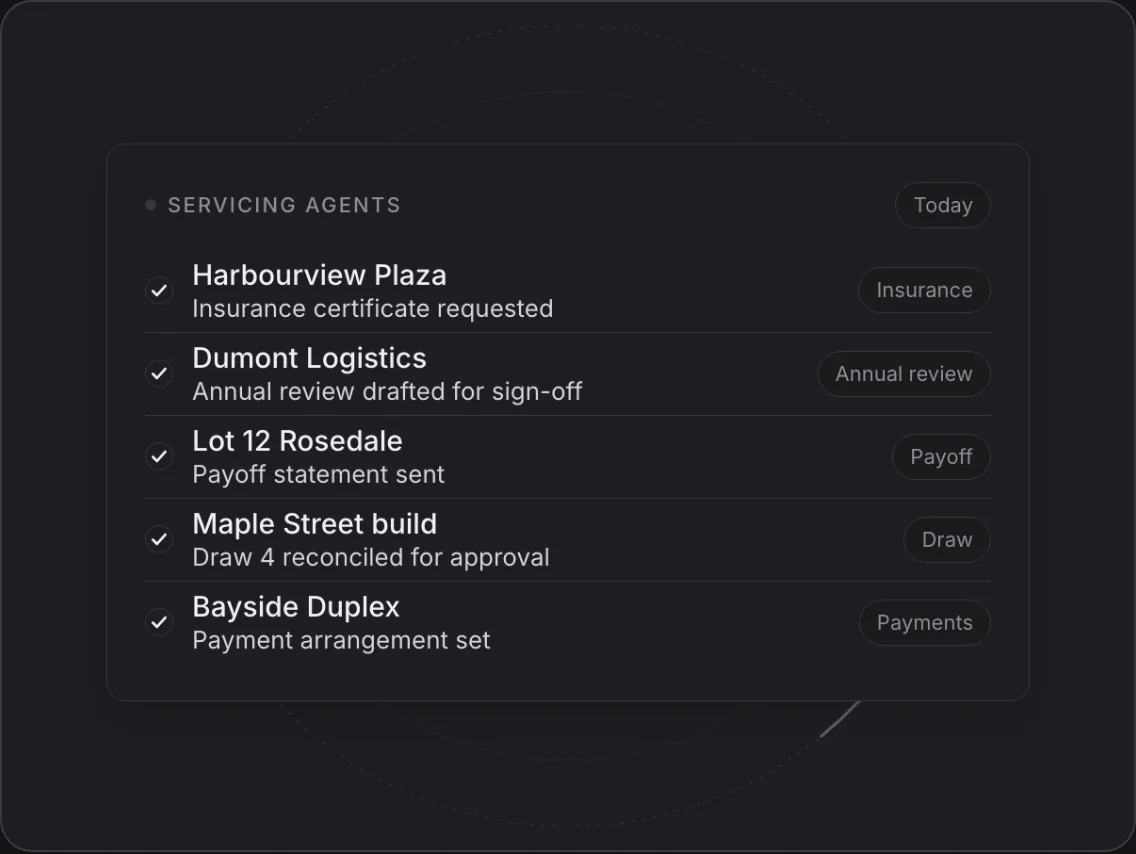
The servicing work, handled from funding to payoff
Every loan checked against its terms
Payments, insurance, taxes and liens
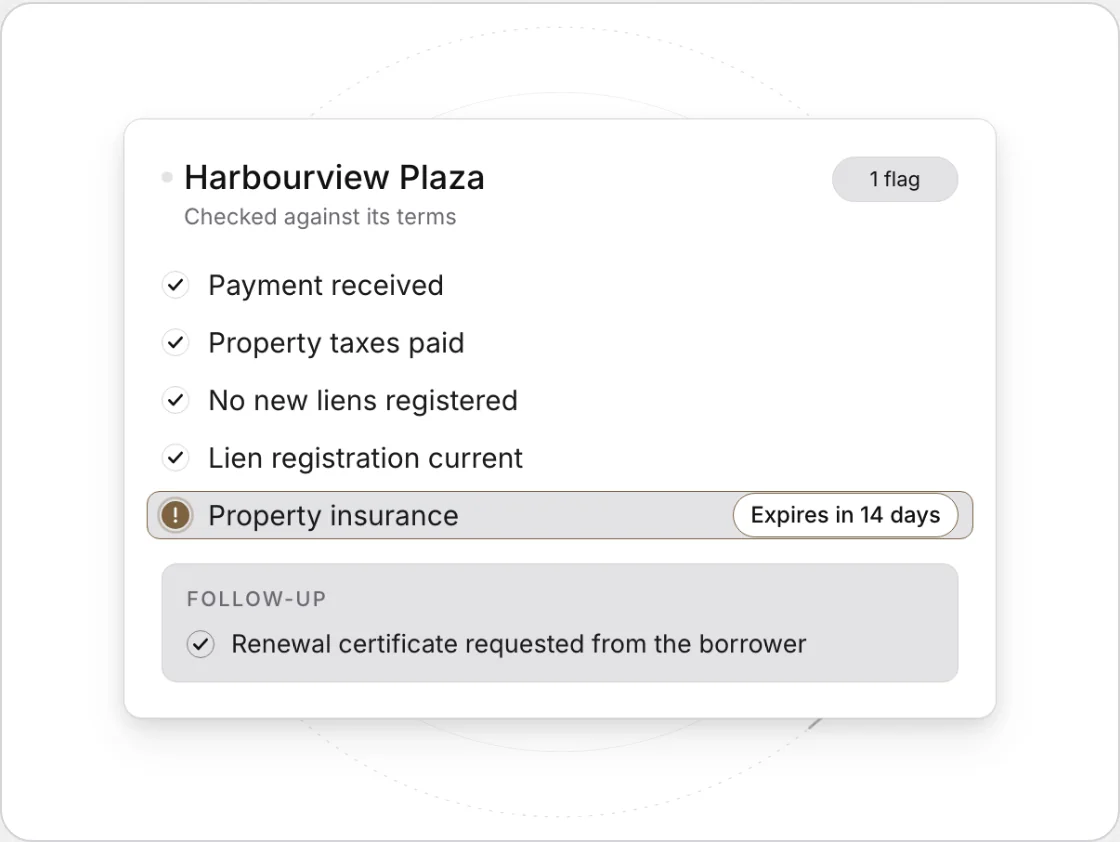
Agents check each payment against the note, confirm that insurance is in force and property taxes are paid, and watch for new liens and expiring filings, such as UCC continuations in the United States and PPSA renewals in Canada.
Draws and reserves
On construction loans, agents reconcile each draw request's invoices and inspection report against the approved budget and track the interest reserve. Your team approves every draw before funds are released.
Annual reviews that prepare themselves
Statements requested when due
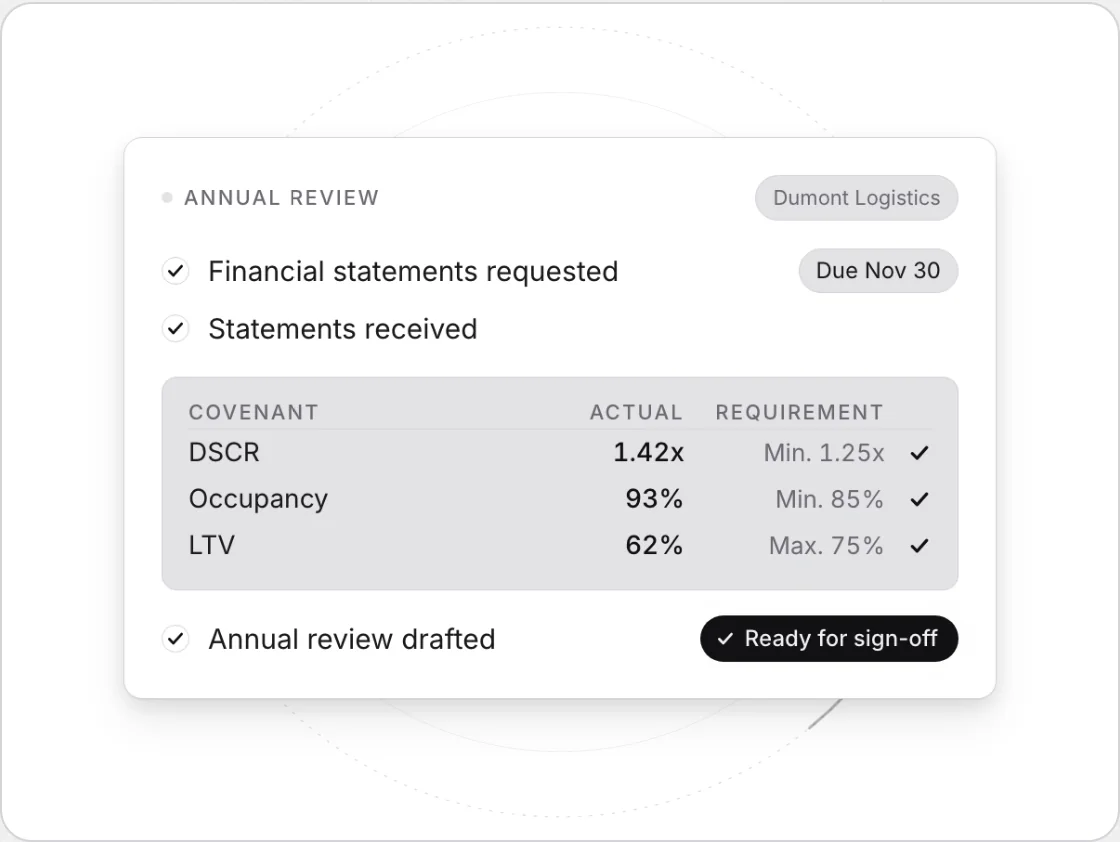
Agents keep the tickler of what each borrower owes you and when, and request financial statements, tax returns, rent rolls and compliance certificates as they come due, following up until they arrive.
Covenants tested, review drafted
They spread the new figures, recalculate DSCR and every other covenant, flag any breach and draft the annual review for sign-off.
Borrowers answered, payments followed up
Requests and renewals
Agents answer borrower calls and messages over email, text and phone, handle payoff, extension and payment date change requests against your rules, and contact borrowers ahead of maturity about renewal or exit.
Early-stage collections
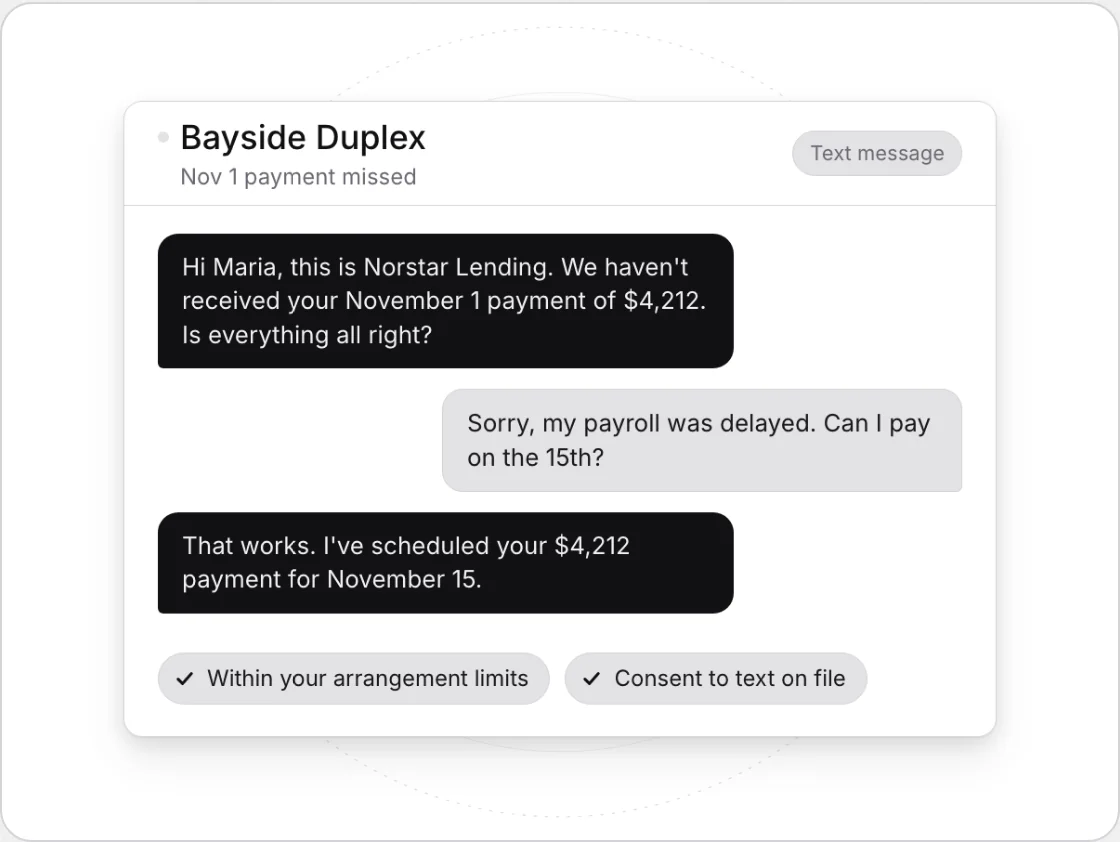
When a payment is missed, agents reach the borrower, find out what happened and set up a payment arrangement within the contact limits and consent rules you set. Accounts that need a person go to your team with the conversation attached.
Agentic loan servicing is loan servicing where AI agents do the work a servicing team does by hand: they check each loan against its terms, request what borrowers owe the lender, answer borrower requests and follow up on missed payments. Loan servicing software records the loan, and the agents act on it. In Sphera Credit, the agents work on the loan management system or on the servicing system the lender already uses, and the lender sets what each agent may do on its own.
A loan servicer manages a loan after it funds, on behalf of the lender or the investors who own it. The work includes applying payments, keeping insurance and property taxes current, tracking covenants and reporting dates, answering payoff and extension requests, handling renewals and maturities, and following up on missed payments. Sphera Credit's AI agents take on the monitoring, the borrower conversations and the follow-up, and the lender's team supervises them and approves anything that changes a loan's terms.
Commercial real estate loans, business loans and lines of credit, private and hard money mortgages, construction loans and unsecured consumer loans. The tasks follow each loan's documents: covenant tests and annual reviews on commercial loans, draw reviews on construction loans, maturity and payoff follow-up on private mortgages, and account requests on consumer loans.
The agents read each loan's note, record what it requires and check the loan against those terms for its whole life. They check each payment against the schedule, confirm that property insurance is in force and property taxes are paid, check that no new lien has been registered, track interest reserves, and follow lien filings before they expire, such as UCC continuations in the United States and PPSA registration renewals in Canada. Any term that is no longer respected is flagged to the lender's team.
Yes. The agents keep the tickler of what each borrower owes the lender and when. They request updated financial statements, tax returns, rent rolls and compliance certificates as they come due, and follow up until they arrive. They spread the new figures, recalculate each covenant, such as minimum DSCR and occupancy, test borrowing base certificates on lines of credit, flag any breach and draft the annual review for sign-off.
Borrowers reach the agents by email, text or phone. The agents answer questions about the loan, send payoff statements, and take requests such as a payment date change, an extension or a renewal: they check each request against the lender's rules and prepare the change. Ahead of maturity, they contact the borrower about the renewal or the exit. The lender sets which changes an agent can apply on its own and which need a person's approval. Hardship requests always go to the lender's team.
Yes, early-stage collections. When a payment is missed, the agents reach the borrower, find out what happened and set up a payment arrangement within the limits the lender sets. Accounts that need a person, such as a dispute or a hardship case, go to the lender's team with the conversation attached.
The lender sets the rules the agents work within: how often, at what hours in the borrower's time zone and on which channels a borrower may be contacted. Each borrower's consent to calls, texts and emails is recorded and checked before every contact. A dispute, a hardship claim or a request to stop contact pauses the agent and goes to the lender's team. Every call is recorded and transcribed, and the transcript is attached to the loan.
The lender decides. It sets a level of autonomy for each action an agent can take: run automatically, require human approval every time, or be blocked completely. The lender's team sets the terms of any extension and approves every payoff. Every agent run is recorded step by step: what the agent read, what it did and why.
No. The agents take on the routine monitoring, requests and follow-up. The lender's servicing team supervises their work, handles exceptions and hardship cases, and approves every change to a loan's terms, so the same team can service a larger portfolio without adding headcount.
Yes. The agents work on Sphera Credit's loan management system or on top of the loan servicing or core banking system the lender already uses, reading from it and writing their updates back to the same records.
Working with Sphera Credit starts with a conversation about the lender's current processes and systems. Sphera Credit then quotes an on-site assessment, in which its team reviews the lender's systems and the integrations between them, maps the lender's business processes and proposes new AI-native ones. If the lender goes ahead, Sphera Credit's team implements those processes on the Sphera platform with the lender's team.
Sphera Credit pricing is tailored to each lender and has three parts: the on-site assessment, the implementation and an ongoing platform fee. Sphera Credit quotes the assessment on its own and bills it hourly, and the lender decides afterwards whether to implement the platform. The implementation is also billed hourly, because Sphera Credit's team works on site with the lender on the technical setup and change management. The platform fee is outcome-based: it follows the loan volume on the platform, so it scales with the size of the lender's operations.
Tell us how your team services loans today
We'll go over how your team monitors loans and follows up with borrowers. Then we'll quote you for an on-site assessment, in which our team maps that work and designs the AI-native processes we implement on Sphera.