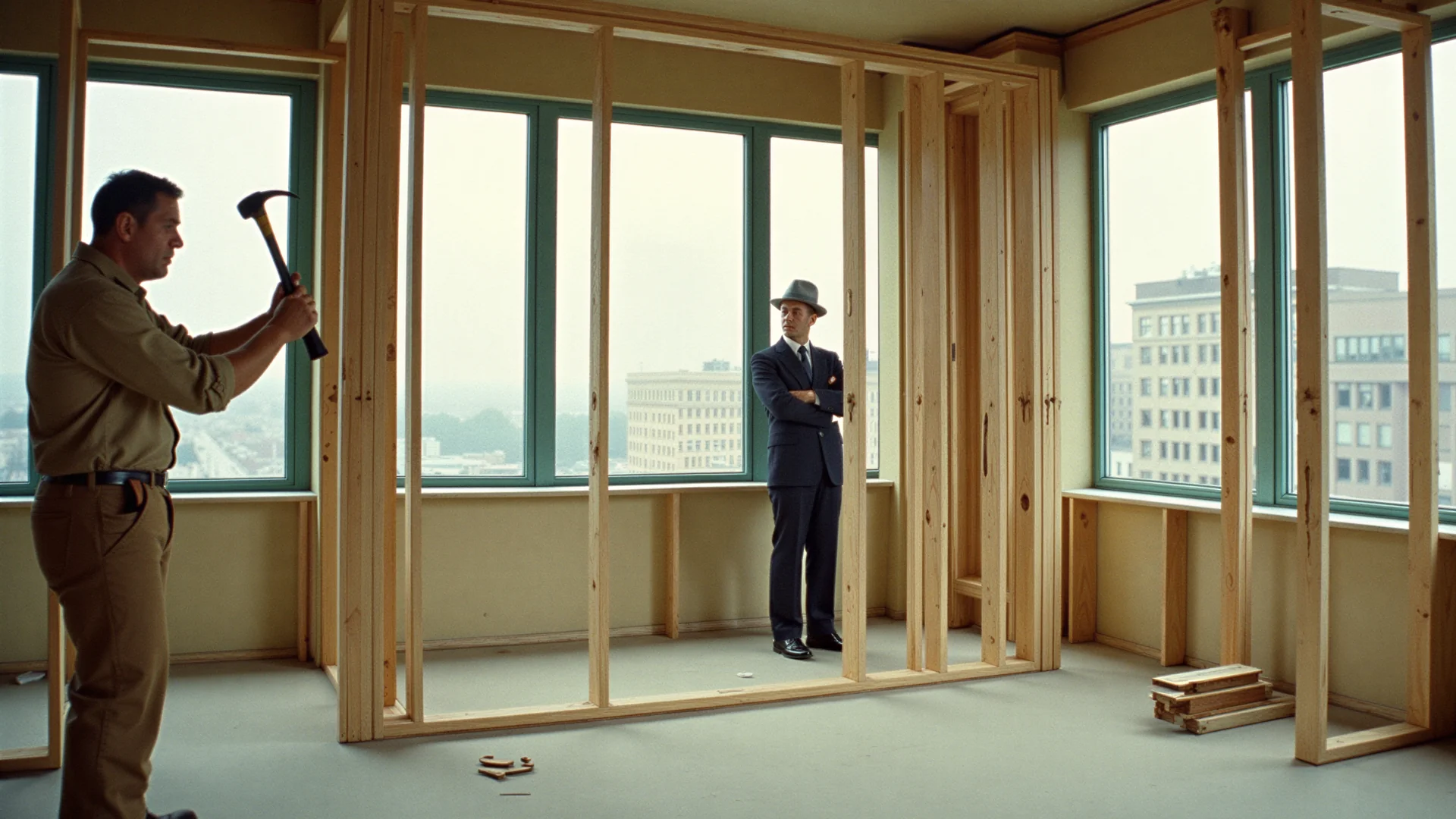

TI stands for tenant improvements: the construction that fits a leased commercial space to the business that will occupy it. A TI allowance is the money a landlord puts toward that work.
A landlord leases most new space unfinished. NAIOP, the Commercial Real Estate Development Association, defines shell space as "space within a property without any, or a minimal level of, interior improvement and finish" (NAIOP, Terms and Definitions). Tenant improvements turn that shell into offices, a shop or a clinic.
Space that an earlier tenant fitted out needs less work. NAIOP names it relet space and notes that brokers also say second-generation space.
The term sits among the commercial lease terms in our glossary.
TI stands for tenant improvements. Brokers write TIs for the work and add a word for the money: TI allowance, or TIA. A listing that offers "$40 TI" offers an allowance of $40 per square foot.
Tenant improvements are the permanent changes a tenant's space receives before the business opens:
- partition walls, doors and ceilings
- flooring, paint and built-in cabinets
- lighting, electrical outlets and data conduit
- plumbing for kitchens, washrooms or exam rooms
- changes to heating, ventilation and air conditioning
The base building stays outside the term. The US General Services Administration (GSA) leases space for government agencies, and its standard lease prices the two apart. Work "not specifically designated as TIs", or as another rent component, counts as part of the shell rent (GSA lease template). The structure, the lobbies, the elevators and the restrooms belong to the shell.
Yes. Canadian leases and accountants say leasehold improvements where US leases say tenant improvements. The Business Development Bank of Canada (BDC) treats them as one term: "renovations to a leased commercial real estate space to make it suitable for your business" (BDC, leasing terms). Build-out and fit-out name the same work.
A TI allowance is the amount a landlord agrees to contribute toward a tenant's improvements, usually quoted in dollars per square foot of leased space. The tenant pays the cost above it.
BDC describes the allowance as "a cash amount offered by a landlord to help you pay for renovations to a leased space". Landlords count it among their concessions. NAIOP lists "above-market tenant improvement allowances" beside free rent among the concessions a landlord grants "to secure a tenant when vacancy is high".
Both sides settle the amount early, in the letter of intent, before the lawyers draft the lease.
The lease, or a work letter attached to it, sets the rules. NAIOP defines a work letter as "a legal document that outlines the obligations of the landlord relative to the improvements necessary to prepare leased premises for a tenant's occupancy" (NAIOP, work letter). It describes the improvements, their cost, the landlord's share and the completion date.
The money moves in one of two ways:
- The landlord builds. The landlord hires the contractor and applies the allowance to the bill. The tenant pays the landlord for the excess.
- The tenant builds. The tenant hires the contractor and pays the invoices. The landlord reimburses the tenant up to the allowance, on the conditions the work letter sets.
The GSA's lease shows one way to keep the price honest. When the price comes from competitive bids, the landlord invites "a minimum of two qualified general contractors" to compete for the work. A private tenant can ask for the same.
The work letter decides what the allowance pays for. An allowance usually covers construction that stays with the building: the items in the list above, plus permits and design fees when the lease says so. It usually leaves out what the tenant takes away. BDC calls those items trade fixtures: "items in a leased space that you can take with you when you move out", such as furniture, inventory and computers.
A turnkey build-out replaces the allowance with a finished space. NAIOP defines turnkey as "a landlord's agreement to provide and pay for improvements to a tenant's premises". The landlord delivers the space "in a condition ready for the tenant's stipulated use".
| TI allowance | Turnkey build-out | |
|---|---|---|
| What the landlord commits | A fixed amount per square foot | A finished space built to an agreed plan |
| Who carries a cost overrun | The tenant | The landlord |
| What the tenant checks | The amount and the costs it covers | The plans and the finishes the landlord will build |
The landlord pays for tenant improvements up to the allowance and recovers that money through the rent. The tenant pays every dollar of cost above the allowance.
Take an office suite of 5,000 square feet. The landlord offers an allowance of $40 per square foot, and the contractor prices the build-out at $55.
| Per square foot | Total | |
|---|---|---|
| Build-out cost | $55 | $275,000 |
| TI allowance | $40 | $200,000 |
| Paid by the tenant | $15 | $75,000 |
A tenant short of cash for its share can borrow. BDC describes a leasehold improvement loan as "a short-term loan (often amortized over five or six years)". Our business loan calculator estimates the payments on one.
The tenant repays the allowance through the rent. A common belief holds that the allowance is free money, and the GSA's standard lease shows otherwise in the open. Its rent table carries a line for tenant improvements rent, and the footnote reads: the allowance "is amortized at a rate of X percent per annum over XX years" (GSA lease template). The blanks hold the interest rate and the term of each deal.
The same lease gives the government three choices when the work will cost more than the allowance:
- "Reduce the build-out requirements"
- "Pay lump sum for the overage upon substantial completion"
- "Negotiate an increase in the rent"
An allowance left unspent has value too. The GSA can return the unused portion to the landlord "in exchange for a decrease in rent". A private tenant can ask for the same clause in its work letter.
Amortization converts the allowance into rent. The landlord treats the allowance as a loan to the tenant and spreads its repayment, with interest, over the lease term.
Price the example's $40 allowance at 7.00% a year, the US bank prime loan rate on October 8, 2026 (Federal Reserve, H.15 release). The rate serves here as a public reference. Each landlord sets its own, and the lease states it. Over a 10-year lease, level monthly payments come to $5.57 per square foot per year.
The chart shows the rent that repays the same allowance over other lease terms.

Source: Sphera Credit calculation: level monthly payments that repay a $40 per square foot allowance at 7.00% a year, the bank prime loan rate on October 8, 2026 in the Federal Reserve's H.15 release.
A short lease leaves the landlord few years to recover the money, so the rent that repays it climbs steeply. That arithmetic explains why landlords tie the size of the allowance to the length of the lease.
The amount moves with the market, the building and the tenant. The US Office of the Comptroller of the Currency (OCC) supervises national banks, and it tells its examiners that tenant improvement costs "can vary widely depending on the market and building class" (OCC handbook). Its handbook describes three patterns:
- Improvements cost a landlord more for a new tenant than for a renewing one.
- Retail landlords usually deliver a "white box", which the handbook describes as "primed drywall and a concrete floor", and the tenant finishes the space.
- Medical office space costs more to fit out than conventional office space, because of its plumbing and wiring.
Lenders read these costs with the leases. The OCC counts tenant improvements among the costs to re-lease space, which it calls "important underwriting considerations". Our guide to commercial real estate lending explains how lenders underwrite a commercial real estate loan.
A cash allowance can be taxable income to the tenant, depending on the lease and on who owns the improvements. Section 110 of the US Internal Revenue Code excludes it for a retail lease of 15 years or less, up to the amount the tenant spends.
The section reads: "Gross income of a lessee does not include any amount received in cash (or treated as a rent reduction) by a lessee from a lessor" under "a short-term lease of retail space" (26 U.S.C. 110). Three conditions apply:
- The space is retail space, where the tenant sells goods or services "to the general public".
- The lease runs "for 15 years or less".
- The tenant spends the money on improvements that revert "to the lessor at the termination of the lease", and the exclusion stops at the amount spent.
An office or industrial tenant falls outside Section 110, and so does a retail tenant on a longer lease. The tax result then depends on the lease and on who owns the improvements. Ask a tax professional before you sign.
The party that pays for improvements and owns them depreciates them. The IRS tells a tenant: "You can, however, depreciate any capital improvements you make to the property" (IRS, Publication 946). The same publication lists qualified improvement property among its 15-year property. In general, that is an improvement to the interior of a nonresidential building, made after the building first went into service. An enlargement of the building, an elevator or escalator and the internal structural framework fall outside the definition. Nonresidential real property itself has a recovery period of 39 years.
In Canada, the Canada Revenue Agency (CRA) places a leasehold interest in Class 13 of its capital cost allowance system. The CRA states that "the maximum rate depends on the type of leasehold interest and the terms of the lease" (CRA, capital cost allowance classes).
| United States | Canada | |
|---|---|---|
| Usual term | Tenant improvements | Leasehold improvements |
| Tax class | 15-year property, for qualified improvement property | Class 13, leasehold interest |
| What sets the pace | The recovery period | The type of leasehold interest and the terms of the lease |
The landlord usually owns them. BDC states that, unless the lease specifies otherwise, "any improvement that is attached to the building usually becomes the property of the landlord". Section 110 rests on the same idea: it covers property that reverts to the landlord when the lease ends.
A tenant that wants to keep an item names it in the lease as a trade fixture. A lease can also make the tenant remove its improvements and restore the space, so read the surrender clause before you design the build-out.
The allowance is one line of a lease. Our leasing guide explains how commercial real estate rent is calculated.